The AI landscape moved fast this week. From new tools that help coding agents stay current to political battles over military AI usage, here's what you need to know.
Context Hub: Solving the API Documentation Problem
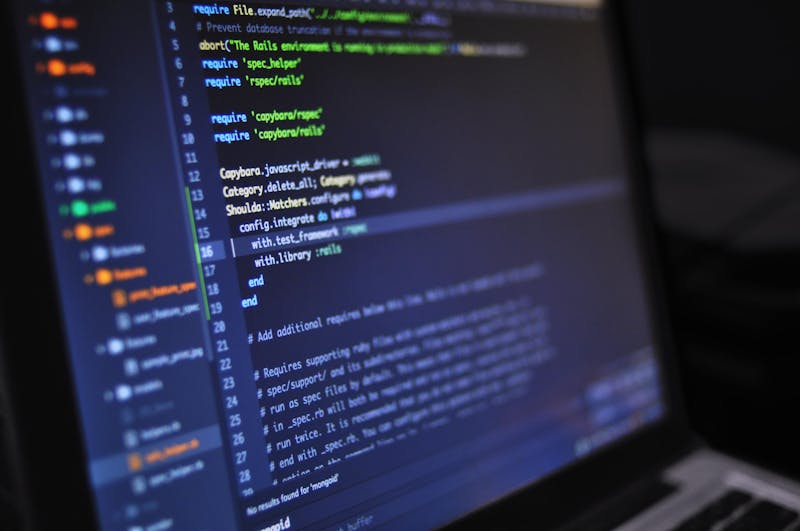
Andrew Ng announced Context Hub (chub), an open-source tool designed to give coding agents access to current API documentation. The problem it solves is real: even the best coding models like Claude Opus 4.6 (knowledge cutoff May 2025) often use outdated APIs or hallucinate parameters because they were trained on old data.
For example, when asked to write code calling OpenAI's GPT-5.2, Claude defaults to the older client.chat.completions.create API instead of the newer client.responses.create that OpenAI now recommends. It also has no knowledge of tools released after its training cutoff, like Nano Banana (released August 2025).
npm install -g @aisuite/chub
chub search openai          # find what's available
chub get openai/chat --lang py  # fetch current docs
Context Hub is built for agents to use, not humans. You can prompt your coding agent to run chub commands, or better yet, give it an agent skill (SKILL.md) to use chub automatically. The tool is designed to evolve with agentic feedback: if an agent discovers a workaround for incomplete documentation, it can save notes for future reference.
Ng and collaborator Rohit Prsad built the initial version over a weekend, populating it with documentation for popular tools: LLM providers, databases, payment processors, identity management, and messaging platforms. The vision is to create a community-driven knowledge base where agents share discoveries and collectively improve documentation quality.
This aligns with broader trends in agent infrastructure. Alongside OpenClaw's growth, we've seen the rise of Moltbook, a social network where agents share information and debate with each other. Context Hub extends this idea to API documentation, creating a layer of current, agent-accessible knowledge that evolves faster than model training cycles.
Source: The Batch Issue 343 by Andrew Ng / DeepLearning.AI
Nano Banana 2: Faster, Cheaper Image Generation

Google launched Nano Banana 2 (formally Gemini 3.1 Flash Image), a successor to its flagship image generator that's roughly 4x faster and 50% cheaper than Nano Banana Pro.
Key specs:
- Input: Text and images (up to 1M tokens)
- Output: Images at 512×512, 1024×1024, 2048×2048, or 4096×4096 resolution
- Speed: 4-6 seconds per image
- Features: Web search grounding, two reasoning levels, multilingual text rendering, character/object consistency (up to 5 characters, 14 objects), SynthID watermarking
- Pricing: $0.50/1M input tokens, $0.045-$0.151 per image depending on resolution
Nano Banana 2 tops the Arena.ai text-to-image leaderboard (1,280 Elo), beating GPT Image 1.5 (1,248) and Nano Banana Pro (1,238). On image editing, it places second (1,401 Elo) behind OpenAI's GPT Image (1,407).

The competition has been fierce. Nano Banana (Gemini 2.5 Flash Image) launched in August 2025 and attracted 10 million new Gemini app users within weeks. Nano Banana Pro topped leaderboards in November. OpenAI responded with GPT Image 1.5 in December after Sam Altman issued "code red" instructions to catch up. Now Nano Banana 2 nearly matches GPT Image 1.5's quality at 60% lower cost.
Why speed and cost matter: Creative workflows (marketing materials, product visualization, storyboards) often require dozens of iterations. Halving the per-image cost doubles your iteration budget. Web search grounding reduces failed attempts, and faster generation means tighter creative feedback loops.
Source: The Batch Issue 343: "Nano Banana 2 Ups Performance/Price"
The Anthropic Standoff: Military AI and Corporate Limits

The biggest story this week wasn't technical; it was political. Anthropic and the U.S. Department of War clashed over acceptable use of Claude in military systems, culminating in the White House banning federal agencies from using Anthropic's technology and designating the company a "supply chain risk to national security."
Timeline of events:
- Jan 3: U.S. military uses Claude (via Palantir) in Venezuela operation. Anthropic expresses concern; Palantir alerts the government.
- Jan 10: Department of War launches program to experiment with AI in combat/intelligence, requiring contract renegotiations.
- Feb 23: xAI agrees to let military use Grok in classified systems "for all lawful uses."
- Feb 24: Defense Secretary Pete Hegseth threatens to designate Anthropic a supply-chain risk unless it relaxes restrictions by 5:01 PM Friday.
- Feb 27, 1:00 PM: Trump posts on Truth Social directing agencies to stop using Anthropic within 6 months, threatening "major civil and criminal consequences."
- Feb 27, 5:14 PM: Hegseth designates Anthropic a supply-chain risk, forbidding military contractors from using its tech.
- Feb 27, evening: OpenAI signs contract allowing "all lawful uses" while retaining safety guardrails.
- Mar 2: OpenAI's Altman admits the deal was rushed and "opportunistic." Contract is amended with (ambiguous) limits on surveillance and autonomous weapons.
What Anthropic wanted: Claude could not be used to surveil U.S. citizens or operate fully autonomous weapons.
What the DoW demanded: No external limitations. Only limits required by U.S. law would be accepted. The department wanted to analyze "unclassified, commercial bulk data on U.S. citizens, including locations and web data." (The military is prohibited from conducting surveillance on citizens but is allowed to aggregate/analyze commercial data.)

The amended OpenAI contract prohibits domestic surveillance of U.S. citizens "including via analysis of 'commercially acquired personal or identifiable information'", but leaves room for other types of data. It bars uses to "independently direct autonomous weapons in any case where law, regulation, or Department policy requires human control," which leaves room for autonomous weapons in other scenarios.
This is the first time the U.S. has designated a domestic tech company a supply-chain risk to national security. Previous targets were foreign: Acronis (Swiss, Russia ties), Kaspersky (Russian cybersecurity), Huawei and ZTE (Chinese electronics).
Privacy Impact: The military's demand for access to "commercial bulk data on U.S. citizens" highlights how location data, browsing history, and app usage (purchased from data brokers) can be used for surveillance without traditional warrants. If you're concerned about your data ending up in government databases, use a VPN like NordVPN to encrypt your traffic and mask your location. Their Threat Protection blocks trackers that feed data broker pipelines. Affiliate link: I may earn a commission if you buy through it, at no extra cost to you.
 Affiliate link: I may earn a commission if you buy through it, at no extra cost to you.
Why it matters: AI is becoming entangled with national security and identity. The dispute raises hard questions about the limits of government power in warfare and AI companies' ability to set terms of use. The DoW wants a free hand; Anthropic showed faith that courts will overturn what many see as harsh retaliation.
Congress is responsible for making rules that protect Americans from mass surveillance and autonomous weapons. Clear legal limits on AI applications could prevent future conflicts between the military and tech companies.
Source: The Batch Issue 343: "U.S. Dept. of War Dismisses Anthropic, Embraces OpenAI"
OpenAI Frontier: Agent Management at Scale

As companies deploy more AI agents, managing them becomes critical. OpenAI's Frontier is a platform for orchestrating corporate agent teams: building them, sharing context, evaluating performance, and managing interactions.
Cisco and T-Mobile piloted the system. OpenAI is now offering it (with dedicated engineering support) to HP, Intuit, and Uber, with broader availability planned.
Key features:
- Identity & permissions: Each agent has its own access controls and guardrails
- Shared context: Agents can share data, tools, applications, and workflow knowledge
- Evaluation & feedback: Set metrics (accuracy, politeness, etc.) and track agent performance
- Memory: Agents "build memories, turning past interactions into useful context" (suggesting automatic improvement over time)
Frontier arrives a few months after Microsoft's Agent 365, which focuses more on security/governance and integrates tightly with Word, Excel, etc. Frontier emphasizes building, evaluating, and improving agents.
Why this matters: As agent deployments grow, visibility becomes valuable. An agent built by one team might have broader utility, or agents from different groups might duplicate work or conflict. A unified control layer makes these issues visible and manageable.
Source: The Batch Issue 343: "Management for Agents"
Aletheia: AI Tackles Unsolved Math Problems

Google researchers introduced Aletheia, an agentic system that generated, verified, and revised solutions to previously unsolved math problems. It uses Gemini 3 Deep Think, Google's most advanced reasoning mode (now available via API).
How Aletheia works:
- Generator produces an initial solution
- Verifier checks it: complete, needs fixes, or critically flawed
- Reviser modifies solutions marked "needs fixes" and sends back to verifier
- If critically flawed, generator tries again from scratch
- Loop continues until solved or iteration limit reached

Results on Erdős problems (difficult conjectures from mathematician Paul Erdős):
- Aletheia claimed solutions to 212 of ~700 unsolved problems
- Mathematicians verified 200 (12 were ambiguous)
- 68.5% incorrect, 31.5% technically correct under some interpretation, 6.5% correct under intended interpretation
- Of 13 correct solutions, 9 were already solved in existing research
- 4 solutions were genuinely novel
Aletheia contributed to six published papers: two where it did essentially all the work, two with significant human+AI collaboration, and two where humans led with AI assistance.
The system works well where breadth across subfields matters, but lacks the depth of human specialists within specific areas. Paul Erdős proposed nearly 1,200 problems between the 1930s and 1996. Fewer than 500 have been solved, but AI models have helped solve around 100 in the past six months alone.
Source: The Batch Issue 343: "Agent Solves Stubborn Math Problems"
Other Notable AI News
GRPO to DAPO and GSPO: Hugging Face published a walkthrough of reinforcement learning alternatives to PPO. GRPO offers efficiency/stability gains; DAPO adds tweaks; GSPO shifts from token-level to sequence-level optimization to reduce variance, especially useful for mixture-of-experts models.
NVIDIA Nemotron-3 Super 120B: NVIDIA released a 120B-parameter model trending on Hugging Face, with multiple weight formats (BF16/FP8/NVFP4) aimed at different inference efficiency tradeoffs.
sarvam-105b: Sarvam AI's 105B-class text generation model is trending, marking another entry in the large open-weights model space.
Bucketsquatting is (finally) dead: AWS S3 introduced "account regional namespace" bucket naming (account ID + region) to prevent deleted-bucket name reuse attacks. A long-standing security concern gets architectural mitigation.
Willingness to look stupid: An essay arguing that sharing imperfect work is a key creative advantage. Good ideas often start as "bad" or uncertain. Status and expectations can discourage publishing and experimentation, but those who share anyway move faster.
Age-verification lobbying research: A deep dive tracing $2B in grants and lobbying across 45 states behind age-verification bills. Raises concerns about privacy implications and OS-level age signaling requirements in proposed legislation.
What It All Means

This week's developments reflect AI's rapid maturation across multiple dimensions:
- Infrastructure: Tools like Context Hub and Frontier show the ecosystem building layers to support agent workflows at scale
- Performance: Nano Banana 2 and Aletheia demonstrate continued capability gains in generation and reasoning
- Policy: The Anthropic standoff reveals deep tensions between tech companies' ethical boundaries and government demands
- Economics: Competition drives costs down (Nano Banana 2 at 60% lower price) while quality improves
The gap between model training cutoffs and current API reality (Context Hub's problem) will only grow as the pace accelerates. The clash between Anthropic and the DoW won't be the last: AI capability is outpacing policy frameworks.
And if AI can help solve 100 Erdős problems in six months, we're entering an era where machines are genuine research collaborators, not just tools.
The infrastructure is maturing. The capabilities are accelerating. The policy battles are just beginning.
Protect Your Privacy: With governments and corporations racing to deploy AI surveillance at scale, encrypting your online activity is more important than ever. NordVPN uses military-grade encryption and a strict no-logs policy to keep your data private. Get 73% off a 2-year plan with this link. Affiliate link: I may earn a commission if you buy through it, at no extra cost to you.
 Affiliate link: I may earn a commission if you buy through it, at no extra cost to you.